To Die Standing: On Failing in Football (and in Life)
25 de agosto de 2025
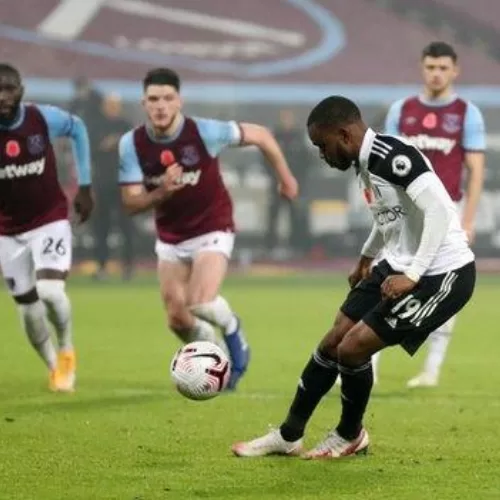
November 7, 2022. West Ham, from East London, faces off against Fulham, from the West. It’s not a derby, nor is it close to what other matches represent in the political, social, or footballing history of the Premier League. They share a city, and for that alone, pride is on the line.
Fulham is behind on the scoreboard, even though they’ve played the better match. Their hopes of rescuing at least a point begin to fade. But football, like life, sometimes has its own sense of fortune — or grace. In a tight play, VAR calls a penalty in favor of the West Londoners with just minutes left.
Like life, football is a chain of cause and effect. Or of accidents. Aleksandar Mitrović, the usual taker, cites discomfort and steps aside. The ball is taken by Ademola Lookman — young, born in England to Nigerian parents. A player who may have risen through the ranks too quickly.
That kind of speed often translates into trying to embrace glory too soon.
He stares at the ball. Licks his lips. Takes a couple of steps to his left, as if to rotate. Makes a strange, inexplicable sprint — surely an attempt to throw off the goalkeeper, who stares back at him with the weight of experience. A generational clash. No doubt.
Lookman drops to his knees, not in surrender, and watches the ball dink softly, without force, toward the keeper’s right hand. He barely has to move. It hits his glove like a drop of rain falling on dry ground. Like an apology that arrives too late.
It’s a grave mistake. A fatal one.
Coach Scott Parker would later call it a result of youth, of inexperience. It makes sense. Not because we make more mistakes when we’re young, but because, over time, we learn from them and make fewer. It’s not about age. It’s about life — and how we walk through it.
Years later, Lookman would say he was devastated. But he also said those around him gave him “a lot of love,” and that helped him “turn pain into power.”
And life — strange, precise — gave him his redemption. Now with Atalanta, in the Europa League final, Lookman scored a hat-trick. A hat-trick. In a European final.
Few players ever get that chance. He didn’t waste it.
It hadn’t been that long. But time is not the point — it’s what we do with it. Lookman understood that. And turned his failure into strength.
He turned his mistake into a classroom. What a guy.
I, as an amateur footballer and a first-time father, have come across failure more times than I’d like. A missed pass. A mistimed run. A bad tackle. My mistakes cost goals — even matches. And they become heavy burdens I carry like a Maradona-esque Sisyphus, endlessly pushing the weight uphill.
I don’t aim to be flawless. I aim not to make the same mistake twice. I don’t strive for perfection. I strive to become a better version of myself through error.
Still not clear?
Then let’s look at one of the most famous failures in football history.
Roberto Baggio. He had already won it all by the time the 1994 World Cup came around.
Final against Brazil. Last penalty in the shootout.
A goal would keep Italy alive. A miss would end it all.
How could the man who had won the Ballon d’Or and played a near-perfect World Cup miss?
Because football doesn’t care about good intentions. Because justice lives in the heavens, not on earth. Because merit only matters when the cameras rewind the day after. You only embrace victory once it’s too late.
And what no one thought would happen — happened.
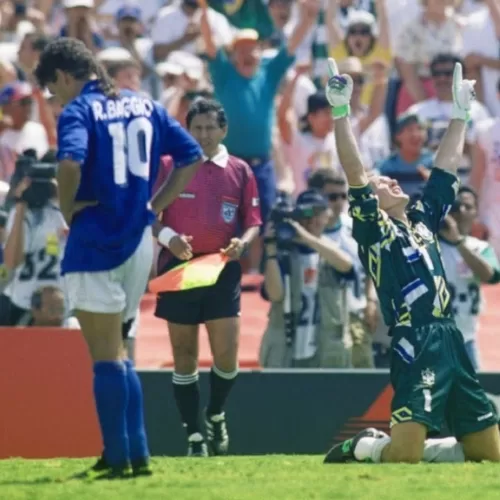
Baggio sent the ball flying into the sky. To that sky where an impartial god refused to make things right.
Even Cláudio Taffarel had already committed to the wrong side. But the ball rose.
What happened next?
Baggio stood still. His eyes lost. His soul slipping away among yellow-and-green jerseys and wild celebration. His solitude, so long and so deep, became the photo that would live forever.
They called him “the man who died standing.” And so he became a living metaphor.
I’ll leave you with the words of the brilliant Iker Ruiz del Barco, one of the finest football writers of our time:
“Roberto Baggio is the embodiment of learning through defeat… he is all of you, those who fight relentlessly to achieve your dreams, those who learned how to die standing in the face of failure.”
Because inside us — deep in the folds of our souls — lives a Baggio and a Lookman. There’s always a mistake waiting to happen. We can pass the ball to someone else and hope they take the blame. Or we can fail. And own it.
Were you expecting a grand ending?
There isn’t one.
Baggio never got a second chance. He never redeemed what he called “the most difficult moment of his life.”
But it doesn’t matter. Because, as a saying popularized in Italy after that World Cup goes:
“Socrates died poisoned. But Baggio died standing.”